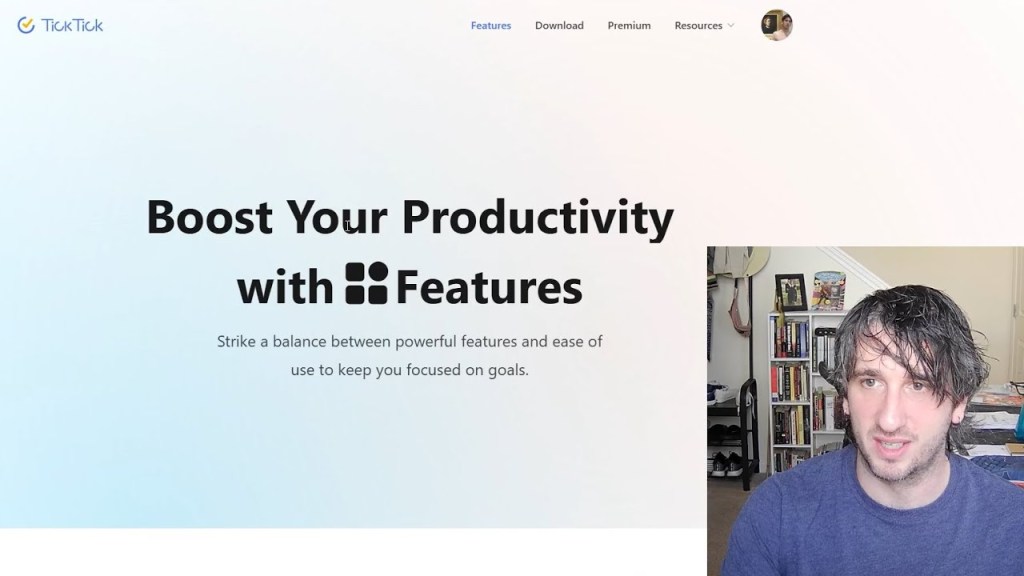
How TickTick taught me to distrust “ease of use”
We tend to treat “ease of use” as an unqualified good. The smoother the experience, the better the app. But what if that smoothness is exactly what’s making your to-do list unmanageable?
I spent years using TickTick, a genuinely well-designed app, and watched my task list grow into something that stressed me out daily. Not because I wasn’t productive enough, but because the app made it too easy to turn every passing thought into an obligation.
In this video, I break down what I call the to-do app trap: how frictionless task capture leads to conflating ideas with commitments, and what I did to fix it.
Capture and clarify are different steps, treat them that way
The solution wasn’t a new app or productivity system. It was adding friction back into the process: using a physical notebook or Google Keep as a buffer before anything hits my to-do list. That one extra step forces me to ask: is this actually something I need to do?
Since making that change, my lists are shorter, I finish what I set out to do most days, and I feel less like I’m perpetually behind. It’s less about being more productive, but rather having a clearer picture about what’s actually a task and what’s not.
If you’ve had this experience with a to do apps (or really any tool where the ease of use started working against you), I’d love to hear about it!
 JW Caterine
Leave a comment